
A walk around the history of Lord Ieyasu
Shizuoka City, where Ieyasu spent about 25 years, is home to many historical remains that formed the foundation of the 260-year Tokugawa period. Start in front of the statue of Takechiyo-kun at the north exit of Shizuoka Station. Pass the former residence of Tokugawa Yoshinobu, Fugetsu-ro, and visit Hodai-in, the temple where Ieyasu's beloved wife was buried. From Tokiwa Park, follow Komagata-dori to Miroku Ryokuchi Park. Exit onto the left bank of the Abe River and run about 1km towards Zenki-san, taking a short break on the Satsuma bank. Continue through Zuiryuji Temple and Sengen Shrine to Rinzai-ji Temple. Head to Sunpu Castle Park, where you can see Ieyasu's hand-planted mandarin oranges and a bronze statue at the site of the main castle. You can visit Higashimikado Tatsumi Tower and Kun Tower. Follow the Kita-kaido road towards Shimizu, turn right with Raigo-in Temple in Ota-cho on your left, and head to Shimizu Park, where Kiyomizu-dera Temple is located. Passing through Kayo-in, you will reach Ho-ta-ji Temple, famous for the Korean envoys, and Kosumi Shrine, the city's oldest shrine, before arriving at the bronze statue of Ieyasu at the north exit of Shizuoka Station.
-
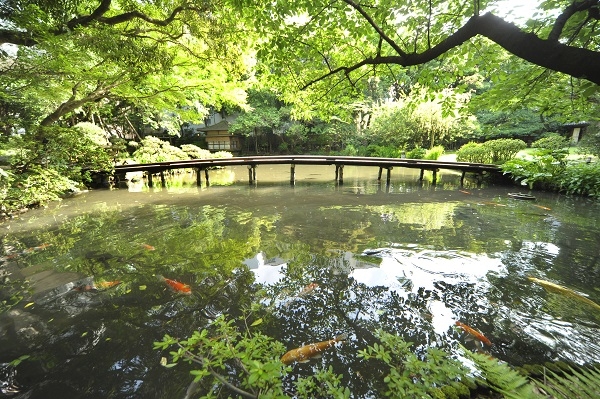
Fugetsu-ro
The site of the mansion where the 15th shogun, Tokugawa Yoshinobu, lived for 20 years after the Meiji Restoration. Currently, it is a long-established restaurant founded in 1891. The garden retains its original appearance, and hanging scrolls written by Yoshinobu and materials recalling those times are on display.
Website here -

Hodai-in
The temple where Saigo no Tsubone (O-ai no Kata), a concubine of Ieyasu and the mother of the second shogun, Hidetada, is buried. The statue of Amitabha Buddha, which became Ieyasu's guardian deity, is still enshrined. Admission fee: 200 yen. Closed on Saturdays, Sundays, holidays, New Year's holidays, and Obon period.
Website here -
Ishibeya
Established in 1804, it is the original home of Abekawamochi, a Tokaido specialty. This is the only place where you can eat freshly pounded, warm, soft mochi. Opening hours: 10:00-17:00. Closed: Thursdays (closed the day before if a public holiday falls on a Thursday), New Year's holiday on January 1st.
-
Satsuma Dote
Total length: 4100m. In order to protect Sunpu from flooding of the Abe River, Ieyasu mobilized feudal lords from all over the country as part of the national construction project to expand Sunpu Castle. The dote is said to have been built by the Satsuma Domain.
-
Zuiryuji Temple
There is a memorial tower for Princess Asahi, the younger sister of Toyotomi Hideyoshi and the wife of Ieyasu. Princess Asahi died at Jurakudai in Kyoto and was buried at Nanmei-in, a subtemple of Tofukuji Temple, but Ieyasu later built a grave for her at Zuiryuji Temple to pray for her soul. Free admission.
-

Shizuoka Sengen Shrine
This shrine was well protected by the Tokugawa family because Ieyasu held his coming-of-age ceremony here. Asama Shrine is a shrine where many gods are enshrined, the main ones being Kanbe Shrine, Asama Shrine, and Otoshiso Shrine. Collectively, these are called "Osengen-san". Free admission
Website here -
Rinzai-ji Temple
The family temple of the Imagawa clan, where Ieyasu frequented when he was a hostage of the Imagawa clan. It is said that Ieyasu learned from Zen Master Sessai, the founder of Rinzai-ji Temple, and acquired the basics of governance as a military commander here. Rinzai-ji Temple has a room for Ieyasu's writing lessons. Not open to the public
-
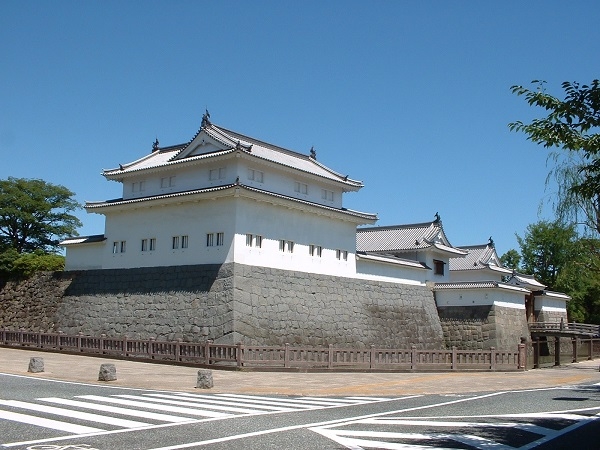
Sunpu Castle Park
A castle built by Ieyasu in 1586 (Tensho 14). The Higashimikado Tatsumi Tower and the two-story, three-story Kun Tower on the southwest corner have been restored. Higashimikado Tatsumi Tower: 200 yen admission, open 9:00-16:30; Kun Tower: 100 yen admission, open 9:00-16:30 (entry until 16:00); closed on Mondays (open on national holidays); New Year's holiday
Website here -
Kiyomizu-dera Temple
Kiyomizu-dera Temple is called "Kiyomizu-san" and was named after the Kiyomizu-dera Temple in Kyoto, which resembles the temple. Ieyasu often visited the temple and donated a Kannon Hall. Free admission. Shimizu Park is located at the western end of the neighboring Yatsuyama mountain
-
Kayo-in Temple
This is the temple where Ieyasu's grandmother, Gen'oni, was buried. On the 50th anniversary of her death, the temple was renamed Kayo-in Temple after her posthumous Buddhist name. It contains the graves of Gen'oni and Ieyasu's fifth daughter, Ichihime. Free admission
-
Hotai-ji Temple
A historic temple in the castle town of Sunpu. It is known as one of the three great temples of Suruga along with Rinzai-ji Temple and Seiken-ji Temple. During the time of Ieyasu, it was used as a resting place for Korean envoys and was called the "cleanest temple in Japan." A temple with a rich exotic atmosphere. Free admission.
-

Kosumi Shrine
It is said that Ieyasu prayed for long-lasting military fortune at this shrine during his time as a hostage of the Imagawa clan. For a long time, it was protected by the Tokugawa clan and revered as the guardian deity of Sunpu Castle. Free admission.
Website here
Bicycle courses
in Shizuoka City
-
Seven routes to learn about, see, and enjoy Shizuoka City
- A walk around the history of Lord Ieyasu
- Ride the Marukoji and Pacific coast bicycle path
- Ride along the Warashina River and enjoy Okushizu
- From the Otani Floodway to Suruga Bay, ride the Pacific coast bicycle path to Kusanagi
- Aim for the Miho no Matsubara, a World Heritage Site
- Tour the Tokaido post towns of Okitsu, Yui, and Kambara
- Ride along the Abe River to Okushizu and the hot spring resort
-
Four routes to enjoy the Miho Peninsula
-
Routes to enjoy long touring style
-
Four routes to enjoy hill climbing style
-
Two routes to enjoy city touring style